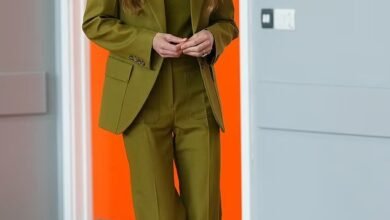
Like Angelina Jolie, My Mastectomy Scars Represent Survival. Its Been So Hard To Rebuild My Femininity After Breast Cancer ROSAMUND DEAN

I remember the moment the nurse undid my bandages after my mastectomy with a horrible clarity. I looked down at my scarred body and felt like some kind of monster.
I had literally been chopped up and put back together again by Dr Frankenstein (with apologies to my surgeon for that analogy).
The operation had saved my life but my body suddenly felt like something ‘other’ – and not mine. The gruesome reality of having a breast removed is hard to imagine for anyone who has not had it done to them.
So actress Angelina Jolie’s decision to show the scars of her mastectomy and the brutality of the treatment in a cover shoot for Time France is something I most certainly welcome. It may be 12 years since Angelina’s preventative bilateral mastectomy – where both breasts are removed – but her name is still shorthand for understanding our own cancer risk and taking action.
and و to و for – تفاصيل مهمة
When I was diagnosed with breast cancer in 2021, at the age of 40, my surgeon suggested that, in light of a family history of the disease (my nan died of breast cancer and my aunt died of ovarian cancer), I should be screened for genetic mutations ‘like Angelina Jolie’, who inherited the mutated BRCA1 gene from her mother.
In her Time interview, she talked about her mother, who died of complications from breast and ovarian cancer in 2007, and said she feared cancer ‘had become her whole identity’.
I know what she means. The way that cancer attacks and metastasises throughout a person’s identity is almost as merciless as what happens inside our body. Although true of all cancers, this feels particularly pertinent for breast cancer, because of how it impacts the parts that define our femininity.
Actress Angelina Jolie on the cover of Time magazine, in which said she feared cancer ‘had become her whole identity’
her و she و of – تفاصيل مهمة
The way that cancer attacks and metastasises throughout a person’s identity is almost as merciless as what happens inside our body
Not only did cancer take my right breast but chemotherapy took my fertility and (temporarily at least) my hair. I was already the mother of two children, aged six and three at the time of my diagnosis, but cancer took away any possibility of a third.
The type of surgery Angelina had meant she could keep her nipples, whereas my right nipple (too cancer-adjacent to preserve) was removed and chopped up for pathology along with the rest of my breast tissue. I saw the report afterwards, systematically logging the cancer status of every slice of my poor breast.
While Angelina had implants, I had a type of surgery called a DIEP (Deep Inferior Epigastric Artery Perforator) flap, where flesh from my abdomen was used to reconstruct my breast.
my و of و the – تفاصيل مهمة
This has upsides – the breast is my own tissue so won’t need replacing as an implant might – and downsides. It’s major surgery. The operation took ten hours and required a long recovery time.
The fact that surgeons can perform this complex procedure, which involves cutting up and reconnecting tiny blood vessels like some kind of ‘flesh electricians’, blows my mind.
I’m extremely grateful to have received this treatment – for free on the NHS – something that’s not available to many women around the world. (It certainly wasn’t available to my nan who, after her first mastectomy in the 1950s, was given a bean bag to pop in one side of her bra.)
But having included that disclaimer – and with gratitude to the doctors who saved my life aside – I can tell you the surgery left me discombobulated.
to و the و – – تفاصيل مهمة
With my hair in tufts from chemo, and symptoms of dread overwhelming me due to the menopause I had crashed into also due to the chemo, I looked at my scarred body and felt distraught.
I had survived, but what next?
My breasts have been on a complicated journey. The first girl in my class to need a bra, I hated the sudden attention from boys. But as I grew into a woman, I started to enjoy how my silhouette made me feel sexy. In my 30s came children, and the mangled feelings around breastfeeding.
By my 40th birthday, I was at peace with my body, feeling confident as I emerged from the fog of early parenthood. I had a cool, fun job as a journalist, and had taken up running and online yoga classes during the pandemic, so I was the fittest I’d been in years.
I و a و my – تفاصيل مهمة
Just a few months later, cancer treatment and surgery left me a shell of my former self.
How I looked was a big part of it, but still only part of it. My identity had tilted on its axis.
Ms Jolie inherited the mutated BRCA1 gene from her mother, who died of complications from breast and ovarian cancer in 2007
Cancer treatment and surgery left me a shell of my former self. How I looked was a big part of it, but still only part of it. My identity had tilted on its axis.
of و part و a – تفاصيل مهمة
Other people are keen for us to move on after treatment. Friends and family will say we ‘look so well’ and express delight that we’re ‘out the other side’. But the scars healing on our body tell only one side of the story. They cannot see recovery involves rebuilding the fabric of who we are.
Now, it’s nearly five years since my own diagnosis. Unlike Angelina, my genetic screening came back clear, showing I was not a carrier of a mutation that put me at a higher risk, so my surgeon advised me to have only the right breast removed, and to ‘keep an eye’ on the left.
I have mixed feelings about this. I’m happy to still have my left breast, with sensation in the nipple reminding me of what I miss in my right. But, thanks to my family history, and the fact I was diagnosed comparatively young, my risk of cancer in the other breast is higher than for the average person.
I know others in the same situation who chose to have bilateral surgery as a preventative measure, despite not having the mutation. If I could go back, should I have done the same? Maybe. Part of me feels as though my left breast is a ticking time-bomb, which could plunge me back into the scary world of chemotherapy and surgery at any point.
the و my و I – تفاصيل مهمة
The surgeons did a great job, but the fact is that now only one of my breasts is my own while the other is a lump of abdominal tissue with an areola tattooed on where my nipple should be.
Inevitably, I’m not as confident about being naked as I once was. However, slowly it’s getting better. For the first couple of years after my mastectomy, I would do a dance with a towel in the gym changing room to avoid traumatising other gym-goers with my (in my mind) mutilated body.
Now, I’m relaxed. My body isn’t perfect but I’m lucky to still have it. Because, thanks to science and surgeons, life goes on. And what would be the point in surviving if only to live a life of dissatisfaction?
I can’t get back the pre-cancer me with two great breasts, functioning ovaries and a breezy ingratitude for my amazing head of hair. But I can build a new version of me, resilient and empathetic, with little inclination to wallow in yearning for my old life.
my و a و to – تفاصيل مهمة
This didn’t happen overnight, of course. It took time, patience and a great deal of therapy. I went from feeling as though I was being suffocated by my identity as a cancer patient, to rejecting it entirely and trying to pretend it had never happened, to finally accepting that it’s part of who I am – just not all of who I am.
‘Illness and pain are part of our existence, but what matters is how we face them,’ Angelina told Time. ‘What helps us get through these moments is life itself.’
Like Angelina, my scars represent survival. And the new version of me chooses to live fully, not fearfully.
Disclaimer: This news article has been republished exactly as it appeared on its original source, without any modification. We do not take any responsibility for its content, which remains solely the responsibility of the original publisher.
Disclaimer: This news article has been republished exactly as it appeared on its original source, without any modification.
We do not take any responsibility for its content, which remains solely the responsibility of the original publisher.
Author: uaetodaynews
Published on: 2025-12-18 01:13:00
Source: uaetodaynews.com