New Analysis Brings Scientists Closer To Solving The Mysterious Voynich Manuscript
“Random” cipher
The cipher in question is called “Nybbe”, named after a 14th-century Italian card game. It does not transcribe the manuscript itself, but demonstrates how the text might have been created. The author of the study, science journalist Michael Greshko, emphasizes that his work does not provide a definitive answer about the meaning of the manuscript, but only suggests a plausible mechanism for its writing.
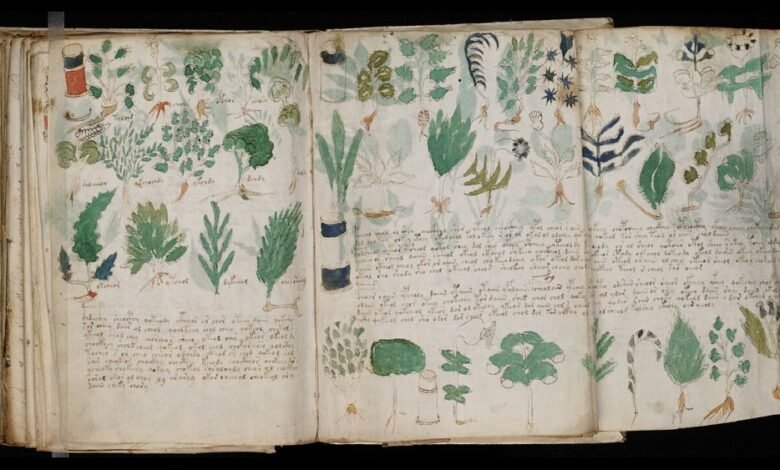
The Voynich manuscript dates back to the 15th century and contains about 38 thousand words written in unknown symbols. Despite than a century of research, the text has never been deciphered.
The manuscript is also known for its strange illustrations of plants, astrological diagrams, alchemical motifs and scenes of naked women bathing. The manuscript is currently kept at Yale University in the USA.
The Knibbe cipher works in two steps. First, a roll of the dice determines how to break the original Latin or Italian text into single and double letter blocks. Then, by drawing a card, one of six tables is selected, with the help of which these blocks are converted into symbols similar to those in which the Voynich Manuscript was written.
The resulting text reproduces several key features of the text of the mysterious book: the length of the “words”, the frequency of the “letters” and some elements of strange grammar. However, he does not repeat the entire manuscript, neither in the exact set of words nor in their arrangement on the page.
Mystery not solved
According to Greshko, the similarities indicate that a similar semi-randomized method could have been used to create the original text.
However, he emphasizes: “The Knibbe cipher is almost certainly not the same way that the Voynich manuscript was created, but it shows that such a method is possible and feasible with the technology of its time.”
The use of dice and cards was chosen deliberately – these objects were widespread in medieval Europe and allowed encryption to be carried out manually. The researcher hopes that his work will become a standard for further computational experiments: differences between the model and the original text may suggest exactly how the manuscript was created.
Voynich manuscript expert Rene Zandbergen, who was not involved in the study, praised the proposed approach. According to him, the work convincingly shows that such methods are possible, although the question of whether the text contains meaning or is a sophisticated hoax remains open.
Disclaimer: This news article has been republished exactly as it appeared on its original source, without any modification.
We do not take any responsibility for its content, which remains solely the responsibility of the original publisher.
Disclaimer: This news article has been republished exactly as it appeared on its original source, without any modification.
We do not take any responsibility for its content, which remains solely the responsibility of the original publisher.
Author: uaetodaynews
Published on: 2026-01-04 00:26:00
Source: uaetodaynews.com